Time is precious, and humans are capable of extraordinary acts of kindness and courage. Even in today’s uncertain world, the human capacity for empathy and connection exists. It always has.
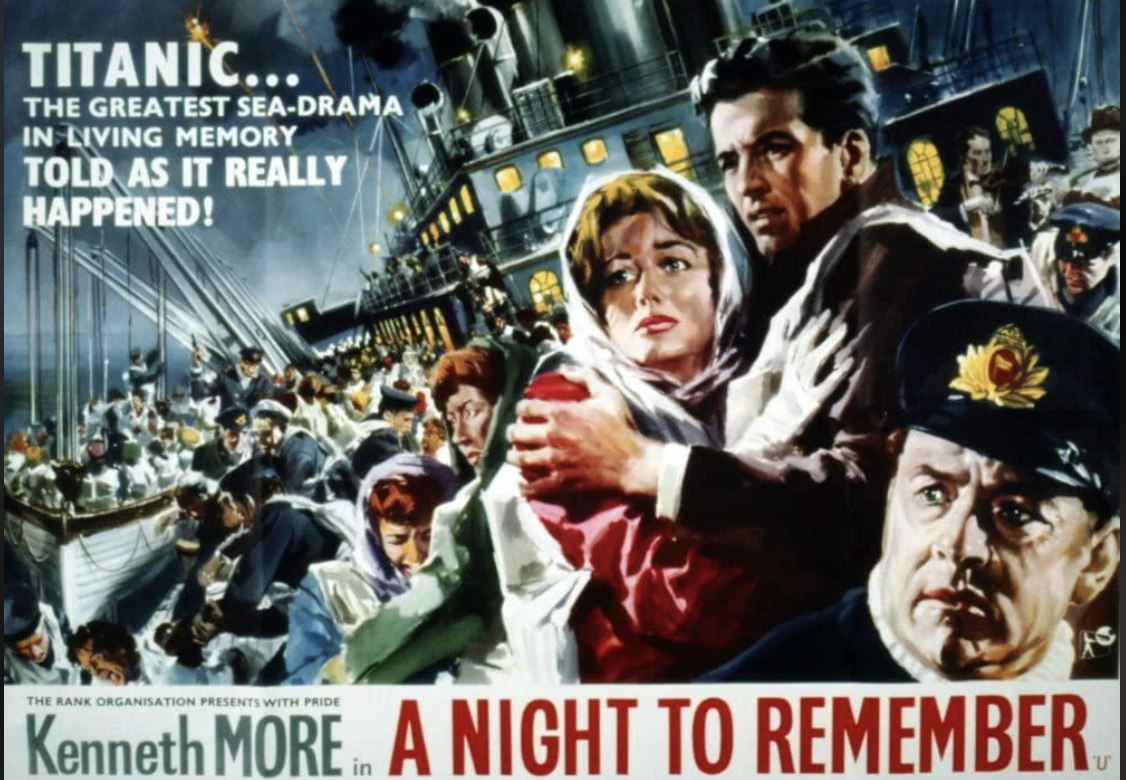
I originally wrote a version of this article as a chapter for my thesis 20 years ago. The thesis explored how the Titanic was ‘made to mean something’ at times of cultural upheaval and crisis. This particular chapter focused on the book and film A Night to Remember and what the unsinkable ship symbolised for the 1950s, aka the ‘atomic age’. I then looked at how the Titanic was used as a metaphor in the aftermath of 9/11.
I hadn’t read the chapter since then, but I thought of it when I watched the 2025 documentary Titan: The Oceangate Disaster. My god, the irony. Given CEO Stockton Rush’s arrogance, disregard for safety warnings, and need for profit, the submersible’s implosion seemed inevitable in hindsight, and Oceangate was widely mocked and derided on the internet.
I recently re-read my article as it was originally published in the volume 9, 2006-2007 edition of the Florida Atlantic Comparative Studies (FACS) Literary Journal, ‘Catastrophe and Representation’. It seemed incredibly dated and, at first, irrelevant. How does looking back at Titanic representations in the 1950s and 2001 mean anything in 2026, when a lot of us have already felt for some time that we’re helpless on a sinking ship? As the saying goes, are we all just uselessly ‘re-arranging deckchairs on the Titanic’ while the ship is being steered into oblivion by oligarch bastards? These same bastards would give themselves first preference to the lifeboats, too.
What good is it to watch out for proverbial icebergs when the actual icebergs are literally melting? And what good is using the Titanic as a warning and lesson when it now seems to be nothing more than an ironic dark joke?
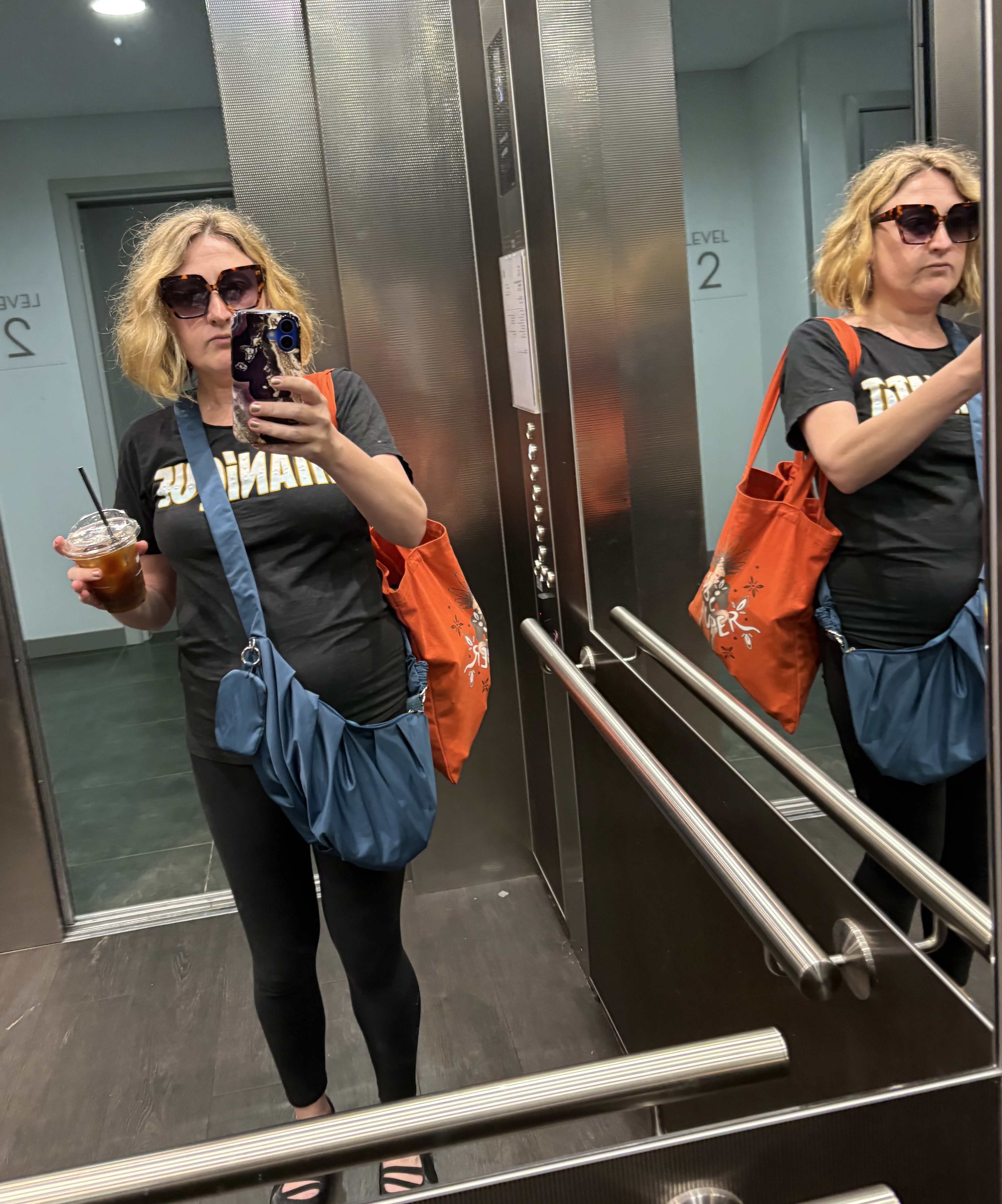
But then I reflected on how the Titanic is just as popular as ever. Even its partial status as a collective joke still gives it meaning. Today, a lot of us get our news through comedians, social media commentators, and independent satirical publications. We find a kinship in the dark humour of it all. We share memes and TikTok videos, and we whooped, clapped and laughed along at widely popular recent musical Titanique, where the audience was encouraged to sing along to a Celine Dion impersonator belting out ‘My Heart Will Go On’. And we did, joyously.
And it’s not just humour that keeps the Titanic afloat in the public consciousness (pun intended). Online, and in books, documentaries, and exhibitions, we find meaning in previously untold stories of passengers and crew. Just look at the current popularity of the internationally touring exhibition Titanic: The Human Story. In 2026, we have more awareness of mental health issues such as PTSD and survivor guilt. It allows us to connect to Titanic on an even deeper and more personal level than ever before. One of my favourite Titanic books is Andrew Wilson’s 2011 Shadow of the Titanic, which explores the lives of survivors from a more psychologically aware lens, distant from the social judgement they would have perhaps received back in the day.
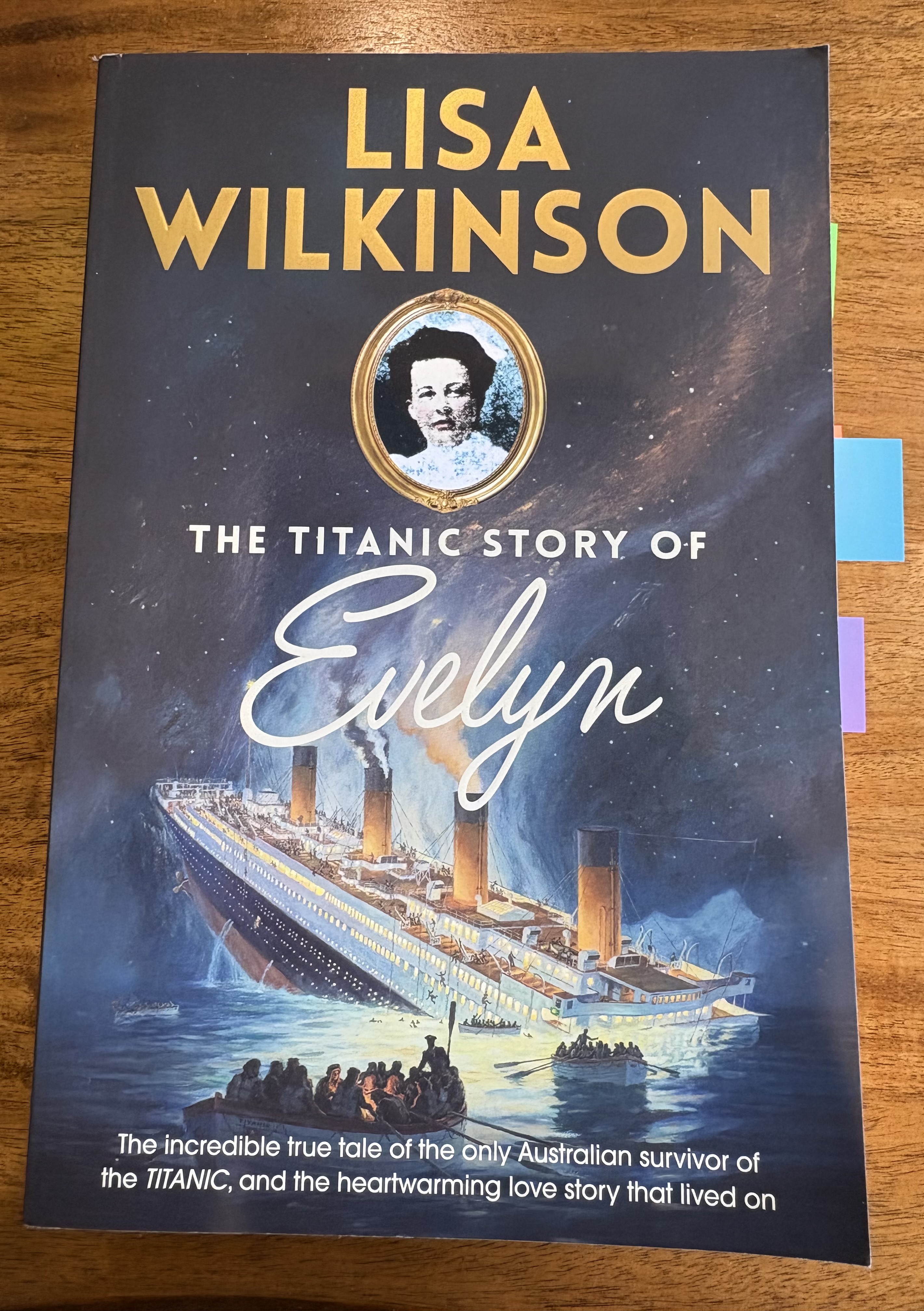
Australian journalist and author Lisa Wilkinson’s 2026 book The Titanic Story of Evelyn tells the story of the only Australian survivor Evelyn Marsden, a nurse who served as a stewardess onboard and played a key role in helping passengers on the liner, in her lifeboat, and on the rescue ship Carpathia.
With new technology, the team behind the 2025 documentary Titanic: The Digital Resurrection were able to discover a steam valve in an open position, an emblem of the heroic sacrifice made by the engineers who kept the power running till the very end. The team could reflect on how this kept the wireless telegraph operational and the lights on so people could find their way to the lifeboats, saving many lives.
Stories like these give us hope that empathy, kindness, courage, and an innate instinct to do the right thing are what’s truly unsinkable. We can glimpse the hopes, dreams, and motivations of the passengers and crew, and relate to them. We can even be inspired by them.
I’ve salvaged bits of what I previously wrote (again, pun intended), so we can deep-dive a bit further (sorry, I just can’t stop with the puns) into how the Titanic story was told at the start, middle, and end of the 20th century, and the lessons it can still teach us today.
Titanic’s lesson for the start and end of the 20th century
Just as the Crawley family in the first episode of Downton Abbey woke to the news of the sinking of the Titanic, previous representations of the Titanic used the acts of sleeping and waking to symbolise the end of an era, a shift from peace to tumult. Titanic survivor John ‘Jack’ B. Thayer’s 1940 account, The Sinking of the Titanic, saw the disaster as the end of a dreamlike epoch of modern complacency and the beginning of an uneasy and alert global consciousness. The Gilded Age was over.
There was peace, and the world had an even tenor of its ways… It seems to me that the disaster that was about to occur was the event, which not only made the world rub its eyes and awake, but woke it with a start, keeping it moving at a rapidly accelerating pace ever since, with less peace, satisfaction and happiness…to my mind, the world of today awoke April 15, 1912.1
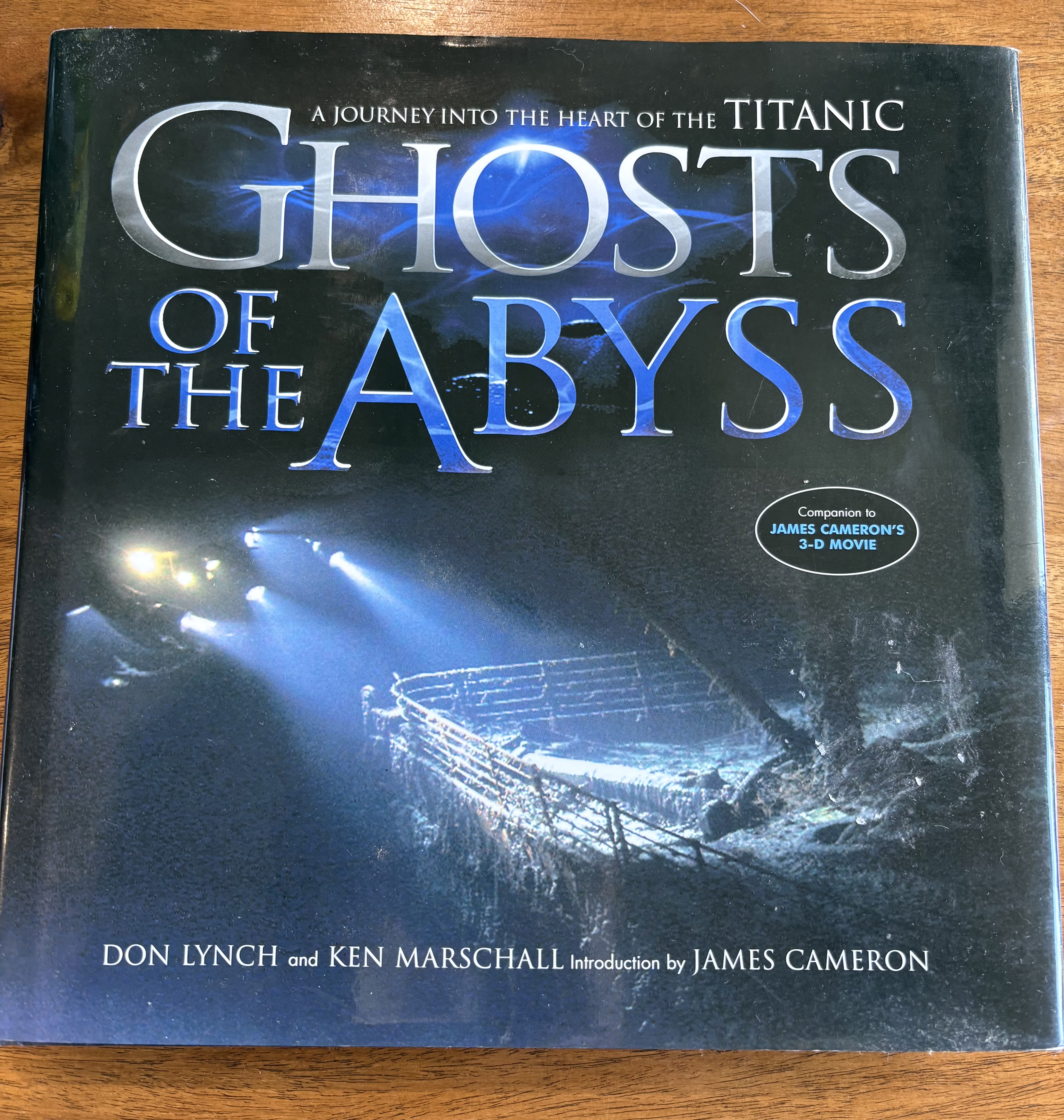
89 years after the sinking, at the very moment two hi-jacked planes flew into the Twin Towers, Titanic director James Cameron was at the bottom of the Atlantic ocean, filming the shipwreck for a documentary. He emerged, in his own words, ‘into a changed world’:
Here we were, poking through the wreckage of the defining disaster of the early twentieth century, while the defining disaster of a new century had just taken place. At first, our passionate study of the Titanic wreck seemed suddenly pointless and trivial.2
Cameron eventually came to terms with the attacks by using the Titanic to grasp the significance of a disaster which would otherwise be overwhelming:
It became a way for us to talk about tragedy and loss, and about the shock and numbness caused by events that seemed out of all human proportion. The Titanic was a “safe” tragedy from another century, and we used it to focus our emotions. It helped us come to terms with what was happening in our world now – and perhaps that is ultimately the reason for our collective fascination with the Titanic. The disaster has always been the quintessential story of loss, of coming to terms with death, of heroism and cowardice, and the full spectrum of human response before, during, and after a crisis. As such, it will always be with us as one of the great lessons of history.3
A similar Titanic narrative took hold of the collective imagination in the atomic age of the 1950s, when the Titanic became popular subject matter. There was even a Hollywood movie about it in 1953, starring major celebrity actors Barbara Stanwyck and Clifton Webb. It’s the decade that also gave us what’s arguably the most definitive book and film about the Titanic ever made – A Night to Remember.
Titanic’s lesson for the 1950s, aka the ‘atomic age’
US President Harry S. Truman declared the atom bomb ‘the greatest thing in history’,4 and it was during the 1950s that, according to Steven Biel, ‘the atomic establishment was telling the public about the sunny side of the atom’.5 However, Andrew Wilson notes that ‘in the midst of the Cold War… there was a perceived threat that, at any moment, the world could end without warning or preparation in nuclear Armageddon.’6
It all sounds too familiar. AI, anyone?
The story of the ‘unsinkable’ Titanic in American author Walter Lord’s 1955 bestseller A Night to Remember, and Roy Baker’s 1958 British film adaptation of the book, indicated reservations about placing absolute confidence in technological advancement, using the Titanic as a warning against modern complacency and to provide a lesson for the atomic age.
Walter Lord’s book A Night to Remember
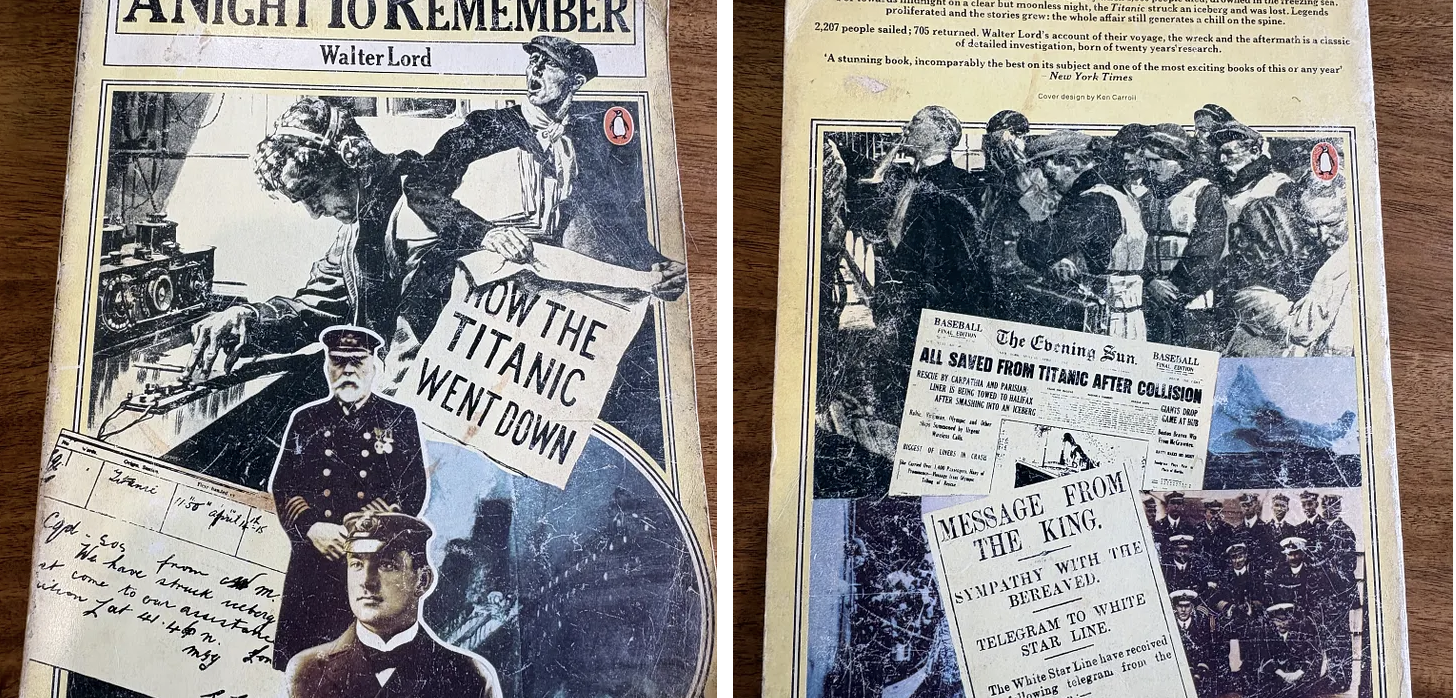
Lord’s account of the last few hours of the Titanic, in which survivors recounted their personal experiences, described how many passengers were doing something innocent in the moments before the ship hit the iceberg. Baker Walter Belford was making rolls for the following day; Jack Thayer called good night to his parents; Lawrence Beesley lay in his second class cabin reading. Other passengers were sleeping, some woken by the collision. Marguerite Frolicher woke up with a ‘start’, Lady Duff Gordon with a ‘jolt’. After the collision, ‘Mrs. Ryerson pondered what to do. Mr. Ryerson was having his first good sleep since the start of the trip, and she hated to wake him…she decided to let him sleep’. All had faith in the ship on which they sailed. After all, as Lord’s narrative stressed, ‘the ship was unsinkable, everybody said so’.7 After the collision, this faith was shattered.
Lord found in the process of story-telling a wider historical significance, that ‘the Titanic more than any single event marks the end of the old days, and the beginning of a new, uneasy era’ in which ‘nobody believed in the unsinkable ship’. The ‘dancing motion of the mattress’ that ‘pleasantly lulled’ Beesley suddenly came to a stop.8
Here, the symbolism of the night is especially significant. Lord starts his book with a description of the lookout’s view of the starlit April sky:
High in the crow’s nest of the new White Star Liner Titanic, lookout Frederick Fleet peered into the dazzling night. It was calm, clear and bitterly cold. There was no moon, but the cloudless sky blazed with stars. The Atlantic was like polished glass; people later said that they had never seen it so smooth.9
There’s a dream-like sense of peace and security. Descriptions of the sea later shifted to the stuff of nightmares. The ocean ‘surged in’ and ‘sloshed along the corridors’ until eventually it was ‘littered with crates, deck chairs, planking, pilasters and cork-like rubbish’. The iceberg, at first small – ‘about the size of two tables put together’ – drew nearer until it ‘towered wet and glistening far above the forecastle deck’. Nature becomes an all-powerful setting in which the unsinkable ship is rendered powerless. Survivor Elizabeth Shutes, watching the shooting stars from her lifeboat, thought to herself ‘how insignificant the Titanic’s rockets must have looked, competing against nature’.10
Imagery like this finds parallels in a Romantic literary tradition, particularly in the work of Samuel Taylor Coleridge and Mary Shelley. Coleridge merges the night, the sea, ice and death in his 1798 poem The Rime of the Ancient Mariner, in which the Mariner tells a guest at a wedding how his sinful act of killing an innocent albatross (which violated the sacred bonds of nature) brings vengeance upon the crew of his ship. This pattern of sin and punishment is thematically similar to the interpretation of the Titanic disaster as a divine and natural retribution for the hubristic act of building an unsinkable ship. As Lord’s text emphasizes, ‘scores of ministers preached that the Titanic was a heaven-sent lesson to awaken people from their complacency, to punish them for top-heavy faith in material progress’.11
The Mariner’s voyage begins ‘merrily’ until a storm drives the ship to a land of ice that is ‘mast-high’ and ‘as green as emerald’: ‘The ice was here, the ice was there,/The ice was all around:/It cracked and growled, and roared and howled,/Like noises in a swound!’.12 After the Mariner shoots the albatross, the dead bird is hung around his neck and the ship is adrift on a sea of ‘slimy things’. Dying of thirst, the men are visited by a spectre, the ‘Night-mare Life-in Death’. Left on a ship of dead men, the Mariner is released when, looking at the slimy ‘water-snakes’, he blesses them for their weird beauty. The albatross falls from his neck, but for his crime he is condemned to wander the earth ‘like night’, preaching worship for all living creatures.
Mary Shelley’s character Robert Walton in Frankenstein, or, The Modern Prometheus, written between 1816 and 1817, is confident as he sets out on the ice-floes on his chartered ship: ‘I am going to unexplored regions, to ‘the land of mist and snow’; but I shall kill no albatross, therefore do not be alarmed for my safety’.13 As Walton listens to the tale of Victor Frankenstein, the fugitive he has taken aboard, similarities become apparent between Frankenstein’s reckless act of creating life and Walton’s ambitions of discovery. As Francis Spufford notes, ‘both men are devotees of what has been called ‘Promethean science’ – the period’s heady sense that the powers of nature might be appropriated for humanity, as the titan Prometheus stole the fire of the gods’.14 Indeed, Richard Howells has drawn similarities between the myth of Prometheus and the popular understanding of the Titanic in terms of hubris and nemesis, seen in Phillip Gibbs’s 1912 Deathless Story of the Titanic, Filson Young’s 1912 Titanic, and later in Lord’s A Night to Remember.15 Shelley’s nightmarish and deathly imagery of ice and darkness seep symbolically and thematically into Lord’s book.
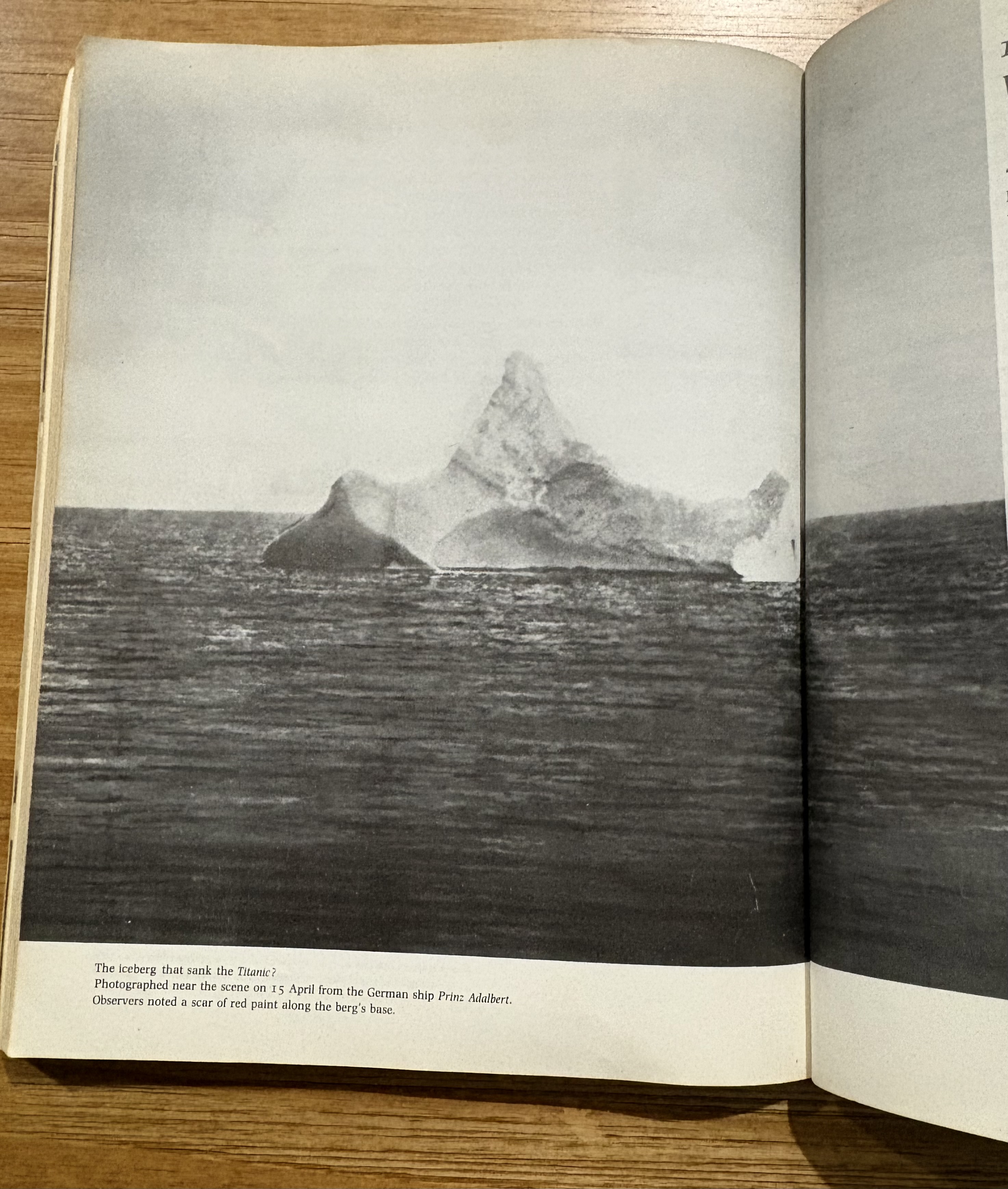
The pack-ice in Frankenstein provides the setting for the battle between Frankenstein and his monster. Frankenstein’s punishment is death. His monster, like the Titanic, self-destructs in a dark and icy oceanic environment. As for Walton, a mutiny among his crew as they are ‘surrounded by mountains of ice, still in imminent danger’,16 drives him to abandon his reckless ambitions and turn his ship around.
Another trope in Lord’s book is the shift from night to day, an analogy for a dawning modern awareness:
The sun was just edging over the horizon, and the ice sparkled in its first long rays. The bergs looked dazzling white, pink, mauve, deep blue, depending on how the rays hit them and how the shadows fell. The sea was now bright blue…Near the horizon a thin, pale crescent moon appeared. ‘A new moon!’ fireman Fred Barrett shouted.17
The ‘new moon’ symbolizes Lord’s proclamation that ‘a new age was dawning’, when modern society would become more cautious and self-reflective, when ‘never again would men fling a ship into an ice field heedless of warning, putting their whole trust in a few-thousand tons of steel and rivets’.18
Roy Baker’s film A Night to Remember
In 1956, British film producer for the Rank Organisation William MacQuitty took an option for the film rights to Lord’s book. Directed by Roy Baker, A Night to Remember premiered at the Odeon, Leicester Square, on 3 July 1958. Baker’s film shows that a blissful ignorance of impending danger and a false confidence in the safety of an unsinkable ship were largely responsible for causing the disaster. The film pays particular attention to ignored ice warnings and the oblivious wireless operator Evans sleeping on a nearby ship called the Californian.
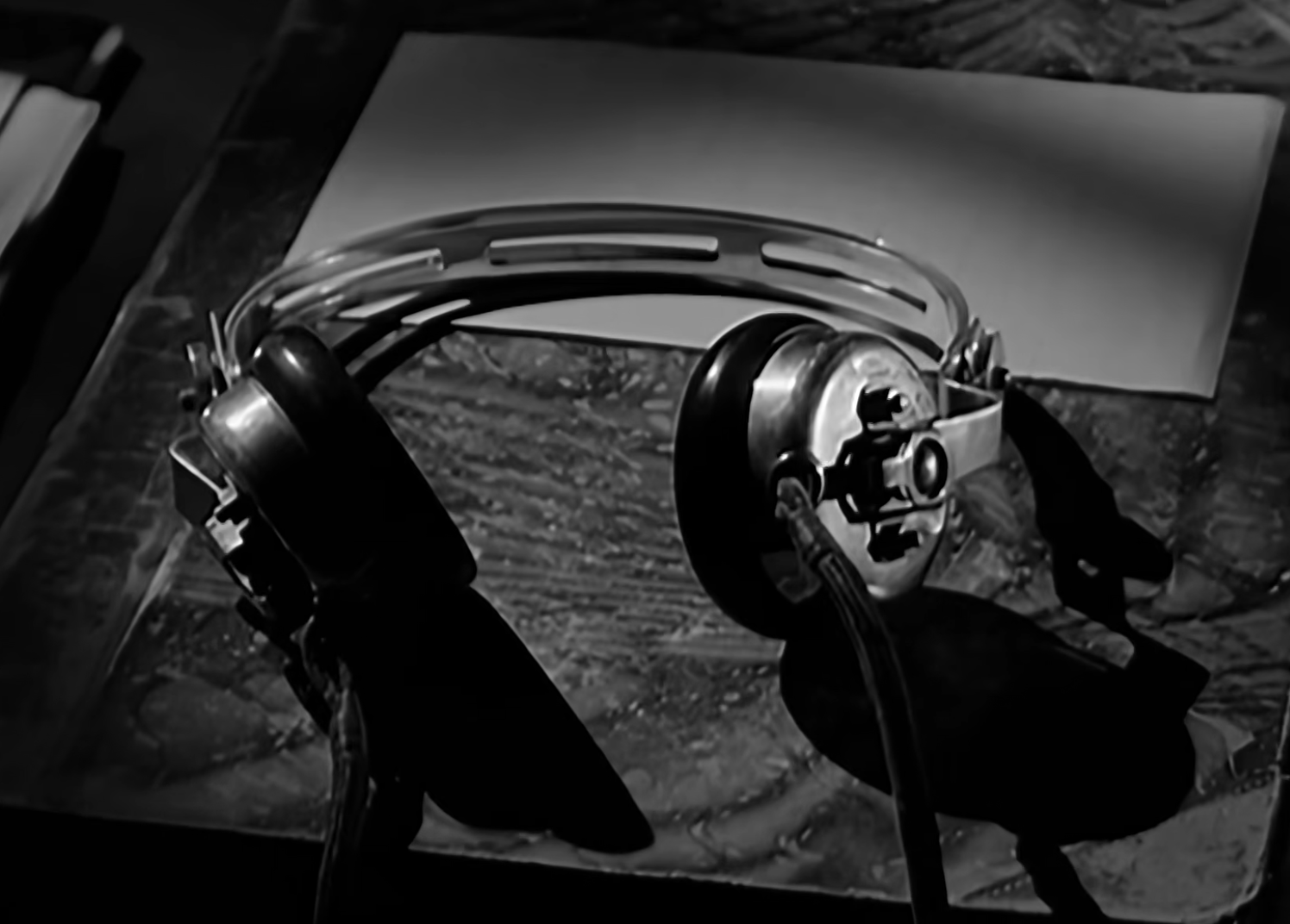
As Jeffrey Richards observes, ‘this was a film in which close-ups were sparingly used…as if to emphasise the collective rather than the individual nature of the experience’.19 Poignantly, the film uses one of its close-ups on an ice warning that has been ignored by wireless operator Jack Phillips, and the earphones of the wireless operator of the Californian through which the S.O.S. messages come through unheard. The camera directly zooms in on the earphones after the power has been shut off and they are silenced.
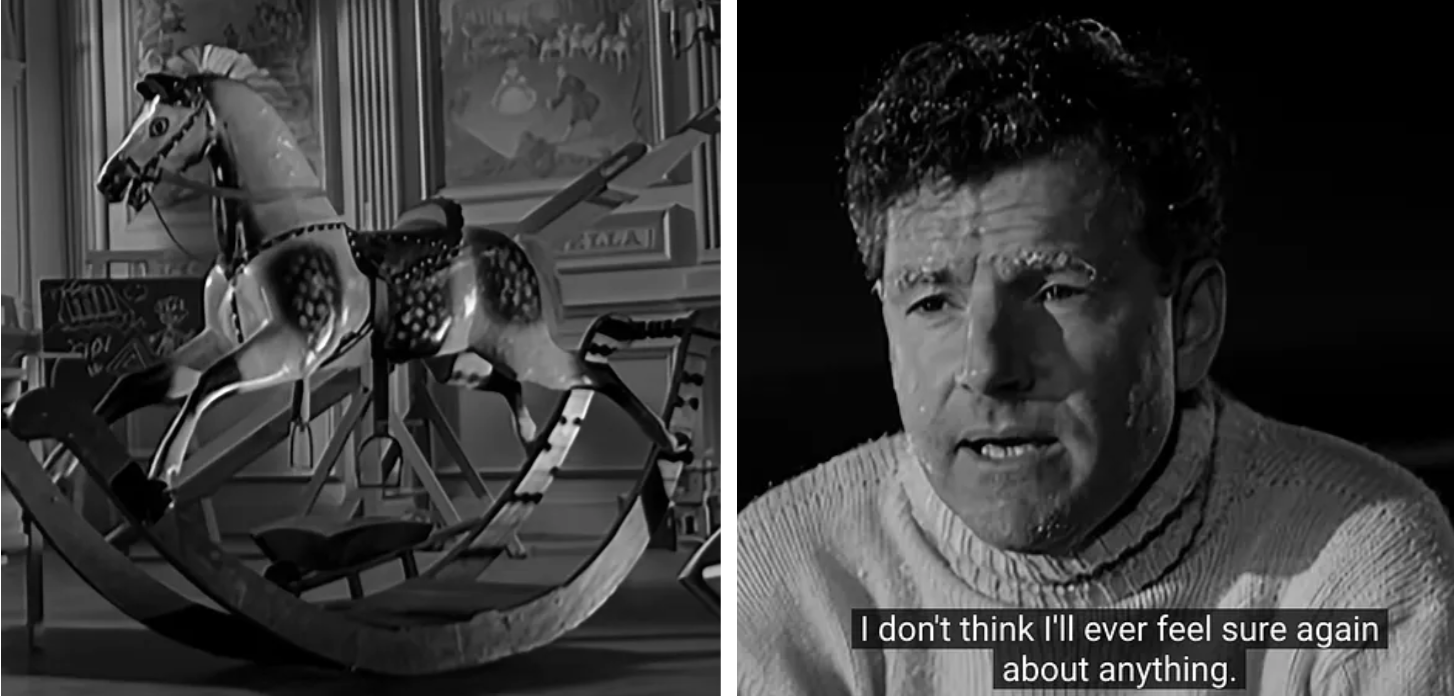
J. Bruce Ismay sleeps soundly in his first class suite, Mrs. Lucas puts her children to bed and Second Officer Charles Herbert Lightoller retires for the night. There is also a close-up of a rocking horse, a symbol of innocence about to be lost. The 1958 British theatrical trailer for A Night to Remember described the film as the depiction of an event in which ‘2,208 happy, confident people sped across a flat, calm sea on a ship everyone knew was unsinkable. Absolutely unsinkable’.
It’s Lightoller who recognises the disaster as the end of modern confidence and complacency when he talks to Colonel Archibald Gracie, both waiting to be rescued on the morning of 15 April:
Lightoller: I’ve been at sea since I was a boy…I’ve even been shipwrecked before. I know what the sea can do. But this is different.
Gracie: Because we hit an iceberg?
Lightoller: No. Because we were so sure. Because even though it’s happened, it’s still unbelievable. I don’t think I’ll ever feel sure again. About anything.
In the light of day, the rocking horse – a symbol of innocence – is seen floating as debris in the Atlantic Ocean.
However, just as Spufford interprets Shelley’s Frankenstein as ‘not so much rebutting the claims of Promethean science as pursuing its consequences’,20 both Lord’s book and Baker’s film are not so much critical of the complacency of 1912 as they are concerned with its consequences. The end-of-an-era perspective of both narratives can be seen as emphasising nostalgia for this sense of lost, albeit fragile, peace and security. In Lord’s 1986 ‘sequel,’ The Night Lives On: New Thoughts, Theories and Revelations About the Titanic, regret was expressed for this loss of social confidence and peace, that ‘the Titanic has come to stand for a world of tranquillity and civility that we have somehow lost…Today life is hectic…in contrast, 1912 looks awfully good – a happier world’. Lord, similarly to Cameron in 2001, goes on to say that ‘compared to the implication of a nuclear confrontation, the figures of souls lost in a shipwreck – any shipwreck – seem almost quaint’.21 As a review of A Night to Remember in Time declared soon after the book was released, ‘this air age, when death comes too swiftly for heroism or with no survivors to record it, can still turn with wonder to an age before yesterday when a thousand deaths at sea seemed the very worst the world must suffer’.22
Dilys Powell’s review of Baker’s film in the Sunday Times on 6 July 1958 shows that the film’s end-of-an-era perspective was deeply wedded to contemporary insecurities in the technologically progressive 1950s:
Perhaps it is good for one to be forced to recall the Titanic…of all the horrors conferred on us by the age of speed and comfort, the most appalling to me is still the sinking of R.M.S. Titanic…I ought to be shrinking much more from the thought of Belsen or Hiroshima…No use: the story of the Titanic still has an effect which none of the tortures or massacres of the past twenty years can equal…The odious distinction belongs to the end of an age… At any rate, after two world wars one is inclined, looking back at the night of April 14, 1912, to take it as a savage warning bell.23
The Titanic was also represented in 1958 as a lesson, and not just a ‘savage warning bell’. The film’s emphasis was not so much the need for modern awareness, but rather what to do with this awareness. Certainly, the film’s end credits, presented against a sun-lit ocean, was preoccupied with the lesson of the sinking:
But this is not the end of the story – for their sacrifice was not in vain. Today there are enough lifeboats for all, increasing radio vigil and, in the North Atlantic, the International Ice Patrol guards the sea-lanes making them safe for the peoples of the world.
There’s also a message of A Night to Remember that goes beyond the need for increased security measures. MacQuitty, in an interview given for Ray Johnson’s 1993 documentary The Making of A Night to Remember, told of a more personal lesson:
There were 85 survivors alive when I made the film, and I corresponded or saw 50 of them, and all these people had this extraordinary calm attitude to life. They were, I wouldn’t say resigned, but they were happy to accept life as it was and not ask for miracles. I was very affected by this because this of course is what I got from the original sinking. I got an attitude to life that you have to make the most of what you get…it’s very important. The last thing you want is to be put down saying that ‘you did so want to be nice to Suzie’ and it’s too late. And ‘too late’ are the saddest words in any language.
A Night to Remember’s ultimate lesson is that time is precious. Dr. William O’Loughlin articulates this personal lesson when he advises Andrews to put ‘people first, things second’. As such, the film is particularly sensitive to time, lost time, and personal relationships. As such, the film is particularly sensitive to time, lost time, and personal relationships. In the two hours and forty minutes it took for the ship to sink, the film shows how various passengers and crew members behaved as they ‘woke up’ to the fact that they were suddenly living on borrowed time. After the collision, Andrews inspects the damage and informs the captain: ‘She made 14 feet of water in the first 10 minutes after the collision…she should live another hour and a half’.
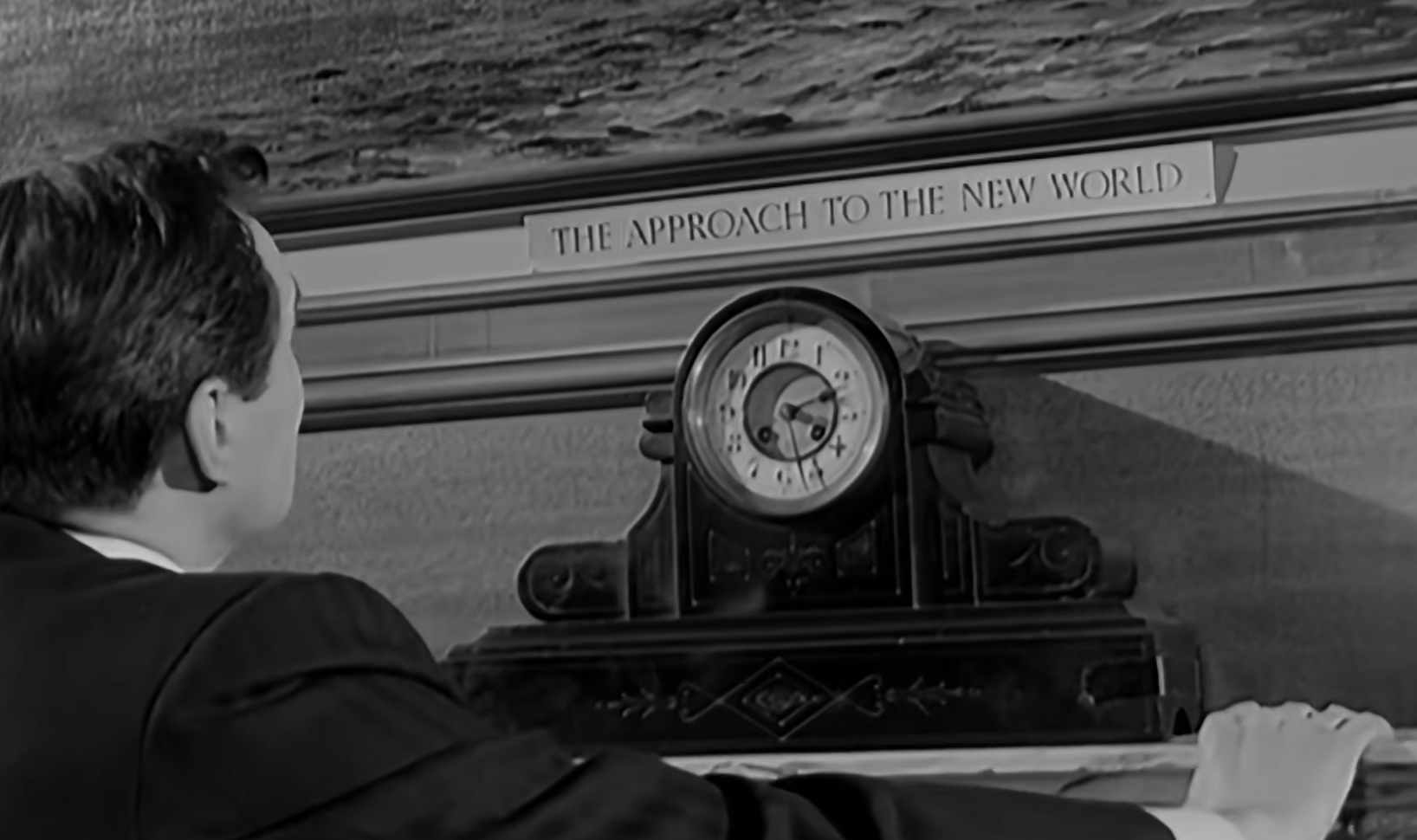
As the sinking progresses, the sense of urgency increases. Lightoller urges the crew to hurry with the boats, telling them that they have had ‘time enough’. Smith orders distress rockets to be fired every five minutes. Lightoller tells a crew member that ‘the water’s up to E deck. There’s not much time left’. A crew member tells a colleague to ‘get up top, quick!’ Husbands say goodbye to their wives. Mr. Lucas says goodbye to his sleeping son. Smith orders Phillips to tell Carpathia to hurry. The time reads 3:50am as the Carpathia nears the vicinity of the wreck site.
Titanic’s lesson for our age
Wilson’s Shadow of the Titanic notes how many passengers were ‘plagued by mental illness for the rest of their lives’:
With symptoms such as anxiety, depression, nightmares, social withdrawal, emotional difficulties, physical disorders, and, in the most extreme cases, total mental collapse… we would now say that they all suffered from post-traumatic stress disorder. It would have been common for these passengers to display signs of what is now described as ‘survivor syndrome’, a condition that was not diagnosed until the 1960s and which is often marked by experiencing an overwhelming sense of guilt’.24
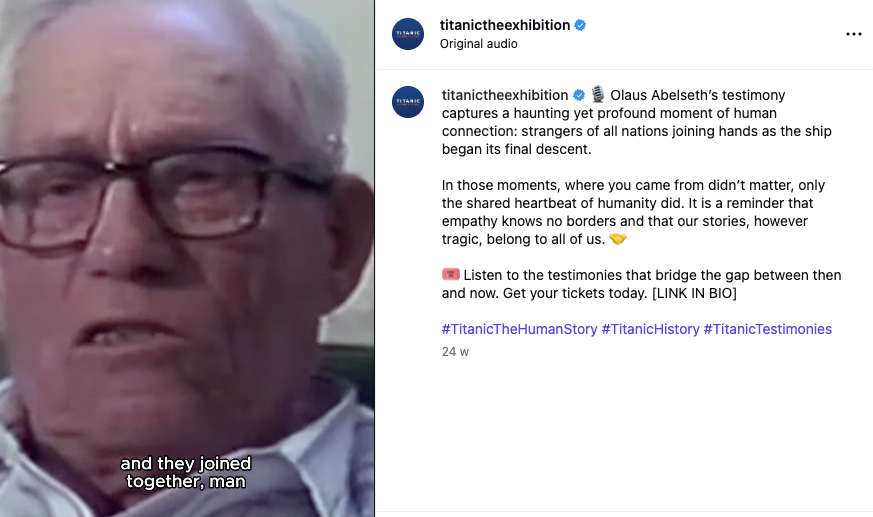
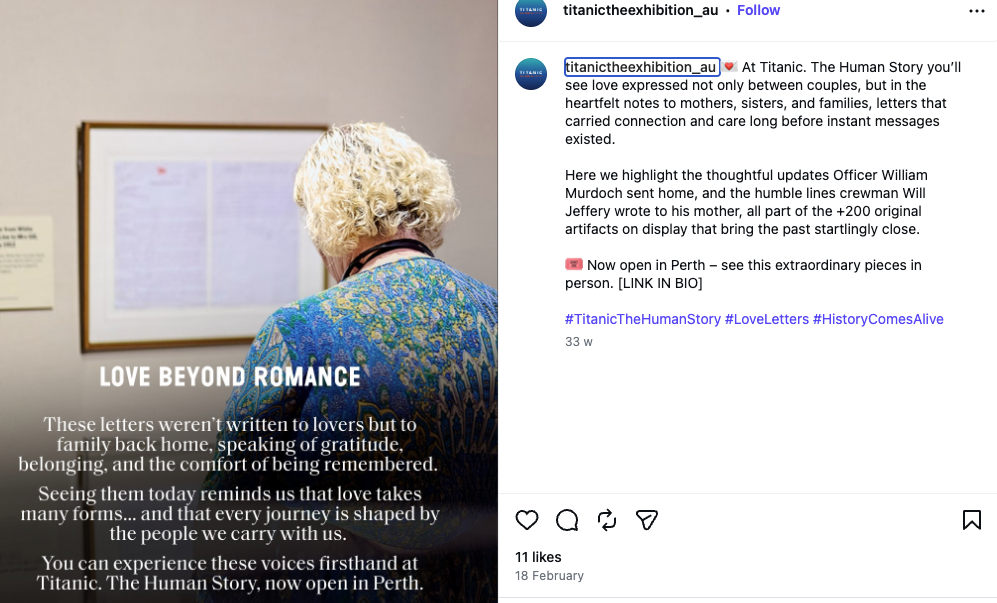
At the exhibition Titanic: The Human Story, thousands of people worldwide learnt more about the untold stories of lesser-known passengers and crew through letters, photographs, and tales passed down through generations. They were able to reflect on and empathise with what these people experienced, now with more understanding of mental health issues, and a heightened awareness and outrage regarding social and economic inequality. Grief, trauma and love are universal, and the exhibition taps into that. You only have to look at the various posts on the exhibition’s official instagram account (@titanictheexhibition) to see that.
Lisa Wilkinson’s recent book The Titanic Story of Evelyn tells the tale of the only Australian survivor, a nurse-turned-stewardess who took to the oars with gusto to get to the rescue ship: ‘Evelyn is on the oars as never before. And pull! And pull! And PULL!’25 The narrative weaves its way through moments experienced by other people in other lifeboats, and later through the decks, floors, and makeshift beds on the Carpathia. Wilkinson sheds light on how various women rallied to help, including Carpathia’s passengers and crew. ‘A blanket is thrown around her shoulders, soft, warm and dry. She sinks into it like a lifeline. ‘How good they are,’ Evelyn thinks. ‘They’ve thought of everything.’ There is calm, kindness, hot tea and hushed voices.’26
Wilkinson also notes the fact that Margaret ‘Molly’ Brown funded a large part of the work achieved by the newly formed Titanic Survivors’ Committee. She describes how ‘some kind women of New York had not only formed the Women’s Relief Committee, but left complete outfits of clothing for the 20 surviving stewardesses.’27 Wilkinson ends her book by expressing how ‘completely inspired’ she was ‘by the many women whose stories I came across… They were a tough, pioneering breed, living in tough, pioneering times… They were women, like Evelyn, who lived their lives rowing against the tide.’28
When Master Mariner Chris Hearn had a chance to see the steam valve turned to the on-position on the digital reproduction of the wreck for the 2025 documentary Titanic: The Digital Resurrection, he reflected on the bravery and leadership of Titanic’s Chief Engineer Joseph Bell: ‘He was doing everything he could, so that other people may have a chance to live.’
The Titanic: The Human Story exhibition also pays homage to the selfless workers as they ‘deserved to be remembered’:
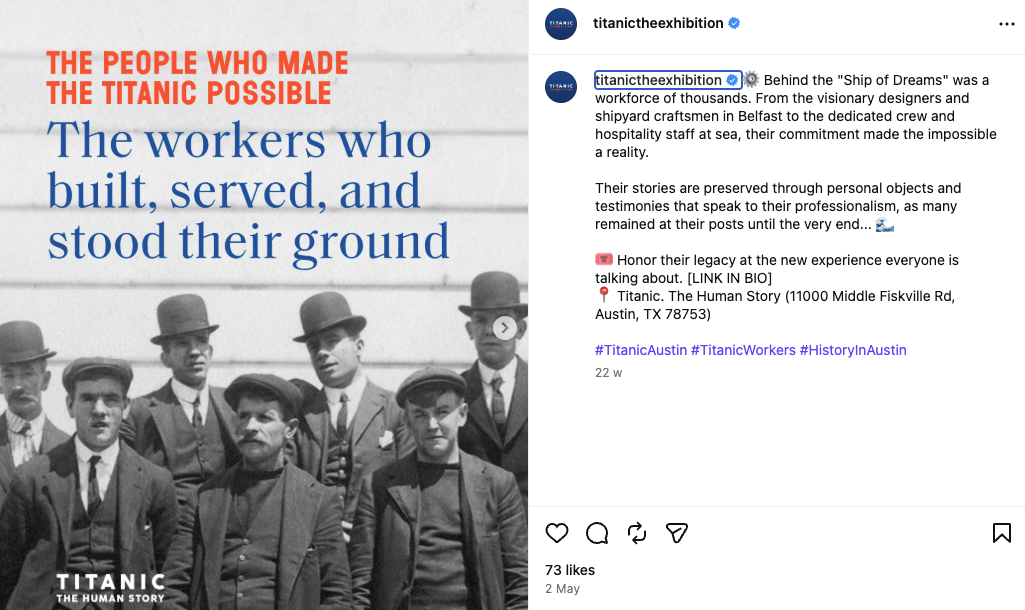
Titanic is a way to see both the worst and best of humanity, and you can choose to focus on the best. Today, in this world of hubris and recklessness, the capacity for human empathy and courage even when it all seems hopeless does exist, and it always has.
And of course, the message still stands that time is precious. Evelyn and her fiance William get married: ‘Because of what happened on the Titanic, and how close each came to losing the other, Evelyn and William are determined to make the most of whatever years remain for them.’29
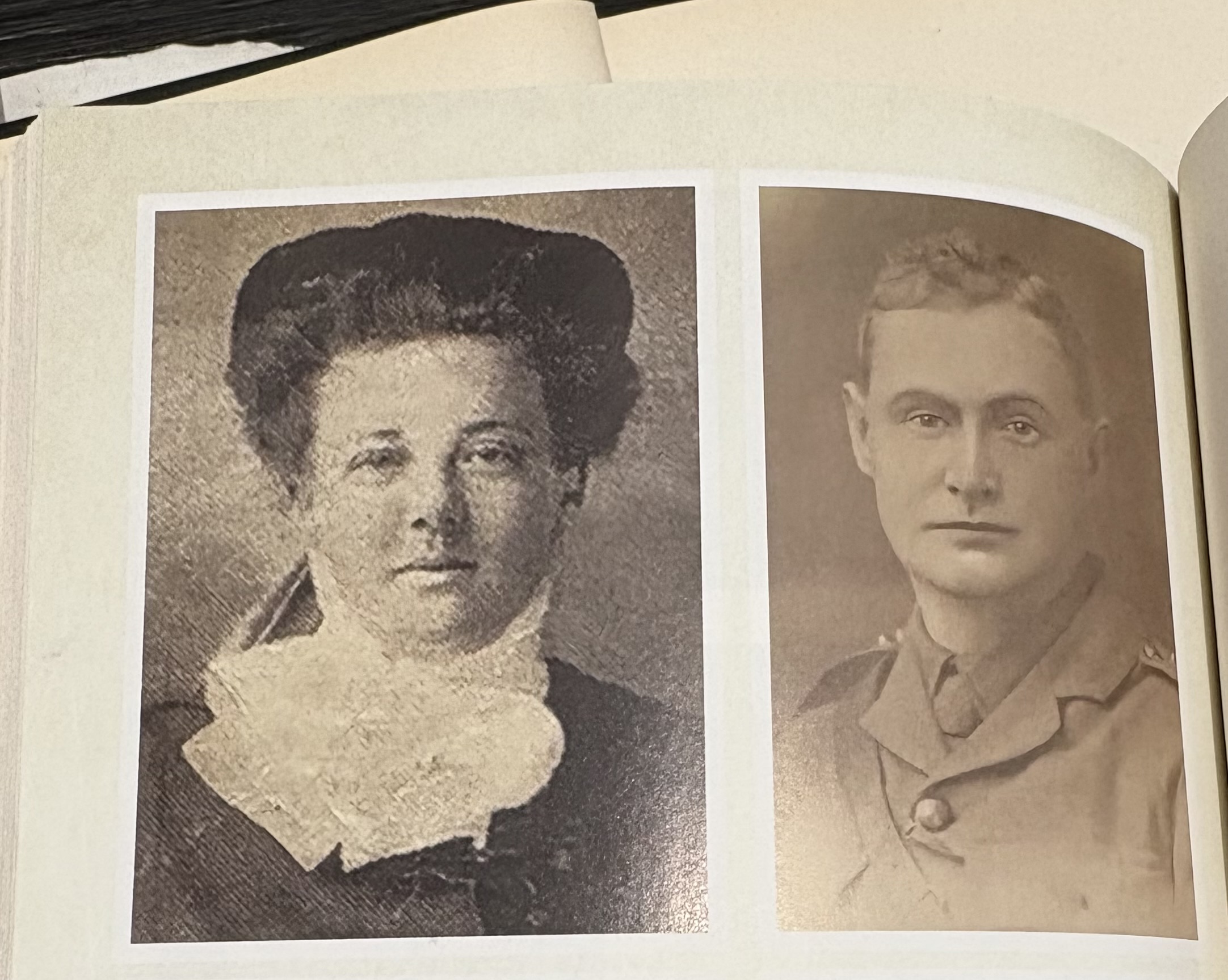
Wilson writes that, for some, ‘the memory of that night spurred them on to greater things… it was as if some survivors chose to squeeze every last drop of experience out of life.’30 He points to examples like author Helen Churchill Candee, who went on to travel and become fascinated by the ruined temples of Cambodia. In 1924, she published the travel book, Angkor the Magnificent. Renee Harris transformed herself into America’s first female theatre manager and producer. ‘Indeed, after the death of their husbands in the sinking, many women were forced to adopt new forms of independence’.31
From my own 2026 perspective where not a lot seems certain in the world, I’m seeing more and more people realise the need for more work/life balance, and to look after their mental health and wellbeing. For those lucky enough to do so, they’re travelling, learning new hobbies or rediscovering old ones, and pursuing creative dreams (myself among them).
I’m doing my best to find moments of joy, connect with others, and hold on to my faith in the innate goodness of humanity, like a life raft. That’s the lesson Titanic has given to me.
References
- John B. Thayer, The Sinking of the Titanic. 1940, Movie Glimpse 2001. Accessed 24 Feb. 2003 http://www.movieglimpse.com/movies/titanic.htm.
- James Cameron, in Don Lynch and Ken Marschall, Ghosts of the Abyss: A Journey Into the Heart of the Titanic (London and Canada: Hodder & Stoughton/Madison, 2003), p. 11.
- Cameron, in Lynch and Marschall, p. 11.
- Qtd. in Walter LaFeber, America, Russia and the Cold War, 8th ed. (New York: McGraw-Hill, 1997), p. 26.
- Steven Biel, Down With the Old Canoe: A Cultural History of the Titanic Disaster (London and New York: W.W. Norton & Company, 1996), p. 167.
- Andrew Wilson, Shadow of the Titanic: The Extraordinary Stories of Those Who Survived (Simon & Schuster UK, 2011), p. 276.
- Walter Lord, A Night to Remember, 10th ed. (Harmondsworth: Penguin, 1981), pp. 15, 21, 22, 138.
- Lord, pp. 96, 22.
- Lord, p. 13.
- Lord, pp. 51, 101, 14, 107.
- Lord, p. 101.
- Samuel Taylor Coleridge, ‘The Rime of the Ancient Mariner’, in Anne K. Mellor and Richard E. Matlack, eds., British Literature 1780-1830 (Fort Worth: Harcourt Brace, 1996), p. 736
- Mary Shelley, Frankenstein, or, The Modern Prometheus, ed. J. Paul Hunter (New York: W.W. Norton & Company, 1996), p. 11.
- Francis Spufford, I May Be Some Time: Ice and the English Imagination (London and Boston: Faber and Faber, 1996), p. 59.
- See Richard Howells, The Myth of the Titanic (Houndmills, Basingstoke, Hampshire and London: Macmillan, 1999), pp. 144-5.
- Shelley, p. 149.
- Lord, p. 131.
- Lord, pp. 96, 93.
- Jeffrey Richards, A Night to Remember: The Definitive Titanic Film (London and New York: I.B. Tauris, 2003), pp. 60-1.
- Spufford, p. 60.
- Walter Lord, The Night Lives On: New Thoughts, Theories and Revelations About the Titanic (Middlesex: Viking, 1986), pp. 19, 13.
- Time, 13 Feb. 1956, qtd. in Biel, p. 158.
- Dilys Powell, Sunday Times, 6 July 1958, qtd. in Richards, pp. 86-7.
- Wilson, p. 224.
- Lisa Wilkinson, The Titanic Story of Evelyn (Australia and New Zealand: Hachette, 2026), p. 432.
- Wilkinson, p. 446.
- Wilkinson, p. 480.
- Wilkinson, pp. 525-6.
- Wilkinson, p. 484.
- Wilson, p. 11.
- Wilson, p. 11.
Film, TV, Theatrical and Exhibition references
A Night to Remember (Roy Baker, William MacQuitty and Rank Film Organisation, United Kingdom, 1958).
Downton Abbey (Julian Fellowes, ITV, United Kingdom, 2010-2015).
Ghosts of the Abyss (James Cameron, Walt Disney Pictures, United States, 2003).
The Making of A Night to Remember (Ray Johnson, Criterion Collection, United Kingdom, 1993).
Titanic (Jean Negulesco, Twentieth Century Fox, United States, 1953).
Titanic: The Digital Resurrection (Fergus Colville, National Geographic, United States, 2025).
Titanic: The Human Story (Musealia and Claes-Göran Wetterholm, touring globally since 2025).
Titanique: The Musical (Marla Mindelle, Constantine Rousouli and Tye Blue, United States, touring globally from 2017-2026).
Titan: The Oceangate Disaster (Mark Monroe, Netflix, United States, 2025).

